News
Back to Chamber Happenings

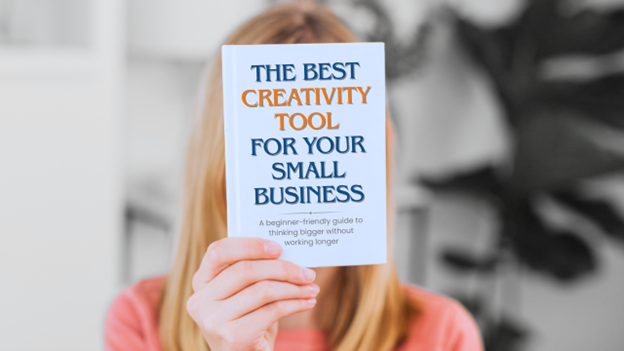
The article explains how AI can be a powerful creativity tool for small businesses — not just for writing content but for generating ideas, reframing brand messaging, and streamlining administrative tasks. It encourages business owners to use AI for brainstorming promotions, creating systems that save time, and turning customer questions into valuable marketing content. While AI can boost efficiency and innovation, the author stresses the importance of keeping your authentic voice by editing outputs and adding personal insights. Overall, small, low-risk experiments with AI can help businesses stand out, tell better stories, and build stronger customer connections.
If you’ve ever stared at a blank screen trying to write a social post…
Or struggled to come up with a new promotion that doesn’t feel recycled…
Or wished you had a brainstorming partner who didn’t need coffee breaks…
Your life is about to get easier.
You probably already know the capabilities of AI as a writing tool, but it’s also a creative accelerator. And for small business owners who do it all, that matters. The key is knowing how to use it.
Here’s how to start.
Use It for Idea Generation, Not Just Content
Most small businesses get stuck in repetition. Same sales, same wording, same graphics, same rhythm.
AI can break that pattern fast.
Ask it:
- “Give me 10 unusual event ideas for a hardware store.”
• “What would a luxury version of my service look like?”
• “What partnerships could a local yoga studio explore?”
• “How could I turn my customers into a community?”
You’re not looking for perfection. You’re looking for sparks.
Even if 7 of the ideas are a no, 3 might stretch your thinking in a way you wouldn’t have reached alone.
Let It Help You See Your Business Differently
One of the most powerful creative exercises is reframing.
Ask:
- “If my business were a brand like Apple, how would it communicate?”
• “What would a playful version of my brand sound like?”
• “How would my competitors describe me?”
• “What emotional problem does my customer think they’re solving by using my product/service?” or “What do they want to solve?”
But we’re not being creative for creativity’s sake. There’s a strategic initiative to creativity.
Use AI to Build Systems That Free Your Brain
Overwhelm kills creativity so use AI to free up some of your time by performing administrative and/or procedural tasks such as:
- Draft email sequences
• Create content calendars
• Outline standard operating procedures
• Build FAQ pages
• Organize messy ideas into structured plans
The more structure you build, the more mental space you free up for real innovation. Automation protects imagination.
Use Everyday Questions to Create Invaluable Content
Your customers ask questions all day.
Instead of answering them multiple times in hundreds of emails, ask AI to help you expand them into valuable content such as:
- Blog posts
• Video scripts
• Social series
• Downloadable guides
Example:
“My customers often ask how long this product lasts. Turn that into a helpful blog post outline.”
“Outline the steps needed to make a good decision when buying our product. Add in the following questions and how we provide the ideal solution.”
You’ve just turned customer curiosity into content strategy.
Brainstorm With It Like a Real Partner
Creativity grows through conversation.
You can say:
“I don’t like those ideas. They feel too generic. Give me something bolder.”
“Make it edgier.”
“Tone it down. My audience is conservative.”
“Give me something that would surprise people.”
You can push back. Refine. Iterate. No feelings hurt, no ego in the way. The more you interact, the better the output becomes.
Don’t Lose Your Voice
AI is a tool, but without good prompts and information to who you are, it won’t have your personality. Just as you would build a relationship with a friend, telling it about your business will do wonders for its output. Still…
Always:
- Edit the final draft
• Add real stories
• Insert your opinions
• Infuse local references
• Keep what feels true
The Real Creative Shift
For small businesses, creativity often feels like a luxury. But you need it to survive in crowded markets.
The businesses that stand out are the ones that:
- Tell better stories
• Frame offers in fresh ways
• Create experiences, not just transactions
• Build belonging, not just customer lists
If you’re brand new to using AI to bolster creativity in your business, here’s your simple starting plan (after you’ve told it who you are, what you do, and who you do it for):
Today: Ask it for 10 new promo ideas.
Tomorrow: Ask it to rewrite your homepage with stronger emotional hooks.
This week: Have it help you outline one new offer.
Small experiments. Low risk. High upside.
Christina Metcalf is a writer and women’s speaker who believes in the power of story. She works with small businesses, chambers of commerce, and business professionals who want to make an impression and grow a loyal customer/member base. She is the author of The Glinda Principle, rediscovering the magic within.
_______________________________________
Facebook: @metcalfwriting
Instagram: @christinametcalfauthor
LinkedIn: @christinametcalf5