News
Back to Chamber Happenings

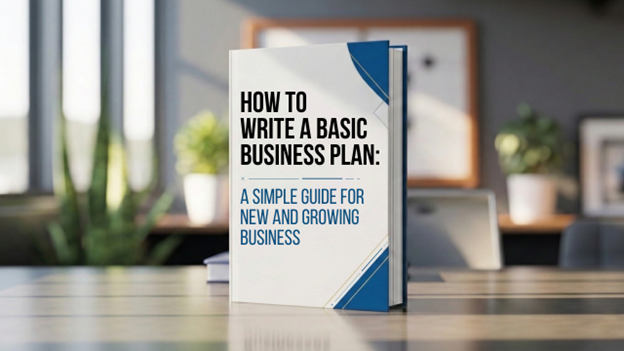
This guide explains how to create a simple and practical business plan for new or growing businesses. It outlines key steps such as defining your business idea, identifying the problem you solve, understanding your target customers, and describing your products or services. The guide also covers researching competitors, creating a basic marketing and sales plan, organizing daily operations, and reviewing essential financial estimates. By setting clear goals and milestones, entrepreneurs can turn their ideas into a structured plan that helps guide decisions, communicate their vision, and build a strong foundation for success.
Starting a business is exciting. It’s also easier when you have a clear plan.
A business plan does not have to be long or complicated. It just needs to answer a few important questions:
- What are you building?
- Who is it for?
- How will it make money?
- And how will it operate day to day?
Whether you are launching a side hustle, opening a storefront, or preparing to apply for financing, this framework will help you create a solid foundation and answer the questions you’ll need to answer to be successful.
For this framework, we walk you through the steps with a fictitious business (Sunrise Bookkeeping) so you can understand how you might draft each step.
Step 1: Start with Your Business Snapshot
This is your quick overview. Short and clear.
Answer these questions:
- What is the name of your business?
- What product or service do you offer?
- Who is your ideal customer?
- What problem do you solve?
- How will you make money?
Example:
“Sunrise Bookkeeping provides monthly bookkeeping services for small local businesses that want clear financial reports without hiring a full-time accountant. We offer flat-rate packages and virtual support.”
If you can explain your business in a few sentences, you’re on the right track.
Step 2: Define the Problem and Your Solution
Every strong business solves a problem or meets a need.
Ask yourself:
- What challenge does your customer face?
- Why does that challenge matter to them?
- Why is your solution better, easier, or more convenient?
For Sunrise Bookkeeping, the problem is simple: many small business owners don’t have time to manage their books. They feel overwhelmed by tax season. The solution is ongoing, organized financial support at a predictable monthly cost.
Be specific. Clarity builds confidence.
Step 3: Identify Your Target Customer
Avoid saying “everyone” when it comes to who you sell to. Successful businesses start by focusing on a clear audience.
Describe:
- Who they are
- What stage of life or business they are in
- What they value most (price, speed, trust, expertise, convenience)
- Where they find services like yours
For example, Sunrise Bookkeeping may target local service businesses with 1–10 employees that need reliable reporting but are not ready to hire in-house staff.
The clearer you are about your customer, the easier marketing becomes.
Step 4: Outline Your Products or Services
List what you sell and what customers receive.
For each offer, define:
- What is included
- How much it costs
- What outcome the customer gets
Example packages:
Basic Monthly Bookkeeping – $400 per month – Includes transaction categorization, monthly reports, and reconciliations
Growth Package – $650 per month – Includes bookkeeping plus quarterly financial review meetings
Clear offers help customers say yes faster.
Step 5: Understand Your Market and Competition
You do not need complex research, but you should know who else serves your audience.
Answer:
- Who are your top competitors?
- What do they do well?
- Where is there room for improvement?
- What makes your business different?
Your competitive advantage might be:
- Personalized service
- Faster turnaround
- A niche specialty
- Flexible pricing
- Strong community presence
Chamber membership itself can become part of your advantage through visibility and local credibility.
Step 6: Create a Simple Marketing and Sales Plan
Now answer two important questions: How will customers find you? How will they buy?
List your main marketing strategies. Examples:
- Referrals and networking
- Social media
- Partnerships with other businesses
- Search engine visibility
- Local events
Then outline your sales process.
For example:
Inquiry → Discovery Call → Proposal → Agreement → Service Delivery → Follow-Up
Keep it simple and repeatable.
Step 7: Plan Your Operations
Explain how your business will function day to day.
Consider:
- Where will you operate?
- What tools or equipment do you need?
- What are your business hours?
- Will you hire help or work alone?
- What systems will you use for payments, scheduling, or customer service?
Operational clarity builds stability.
Step 8: Review the Financial Basics
Even a simple plan should include realistic financial thinking.
Outline:
- Startup costs (equipment, website, inventory, deposits)
- Monthly fixed expenses (rent, software, insurance)
- Variable costs per sale
- Average price per sale
- Estimated number of sales per month
Then estimate:
Monthly Revenue = Price × Number of Sales
Break-even point = Monthly Fixed Costs ÷ Profit per Sale
These numbers do not need to be perfect, but they should be thoughtful and grounded in research.
Step 9: Set Your First 90-Day Milestones
Turn your plan into action with clear goals:
- Finalize pricing
- Secure space or suppliers
- Build website and online listings
- Join professional organizations (these can be critical for networking, advice, and credibility)
- Launch with a promotional offer
- Gain your first 10 customers
- Collect reviews
A plan only works if it leads to progress.
When You May Need a Longer Business Plan
A basic plan works well for many small businesses. However, you may need a more detailed version if you are:
- Applying for a bank loan
- Seeking investors
- Purchasing a franchise
- Opening multiple locations
- Launching a capital-intensive operation
In those cases, your plan may require expanded financial projections, cash flow forecasts, and deeper market research.
Keep in mind, a business plan is not about perfection. It’s about clarity. It helps you make better decisions, communicate your vision, and build confidence in yourself and others. Most importantly, it gives your idea structure.
If you are starting or growing a business in our community, the Chamber is here to support you with connections, education, and local insight. We encourage you to take the next step and turn your idea into a well-planned reality.
Christina Metcalf is a writer and women’s speaker who believes in the power of story. She works with small businesses, chambers of commerce, and business professionals who want to make an impression and grow a loyal customer/member base. She is the author of The Glinda Principle, rediscovering the magic within.
_______________________________________
Facebook: @tellyourstorygetemtalking
Instagram: @christinametcalfauthor
LinkedIn: @christinametcalf5